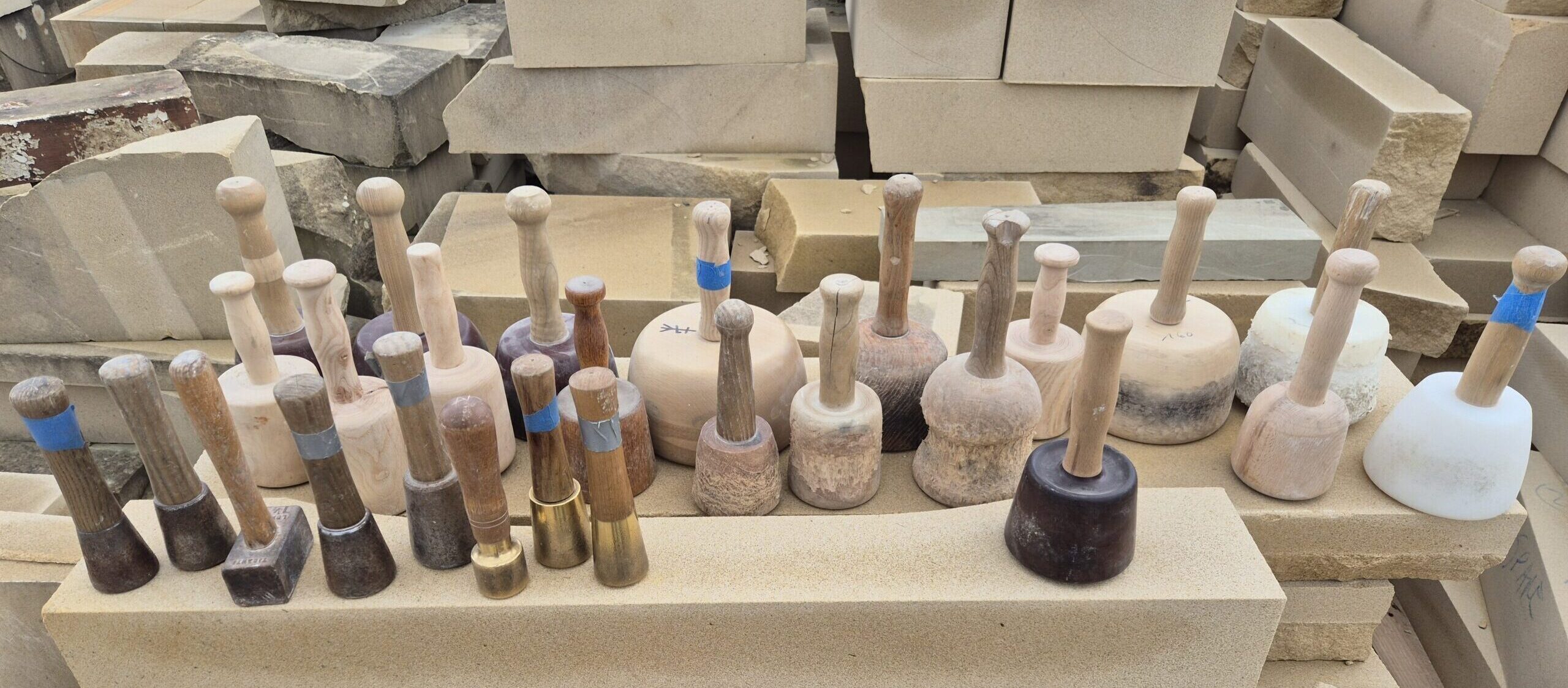
Heritage Education
Training apprentices is a fundamental part of our workshop and something to which we have been committed since the practice was established. We believe that traditional craft is best learned through working alongside experienced craftspeople: looking closely, watching, asking questions, practising skills and then applying them to real work in the workshop and on site.
An apprenticeship is not simply about learning a set of practical skills. It is about becoming a craftsperson. Training begins with the foundations — learning to look carefully, use tools properly, understand materials, work accurately and observe how experienced craftspeople approach their work. At this stage, much is learned through watching, repetition and direct experience: allowing knowledge of materials and making to become familiar before expecting interpretation or independent judgement. As skills develop, an apprentice begins to draw and set out, understand buildings and existing fabric, assess problems and adapt what they have learned to what they find.
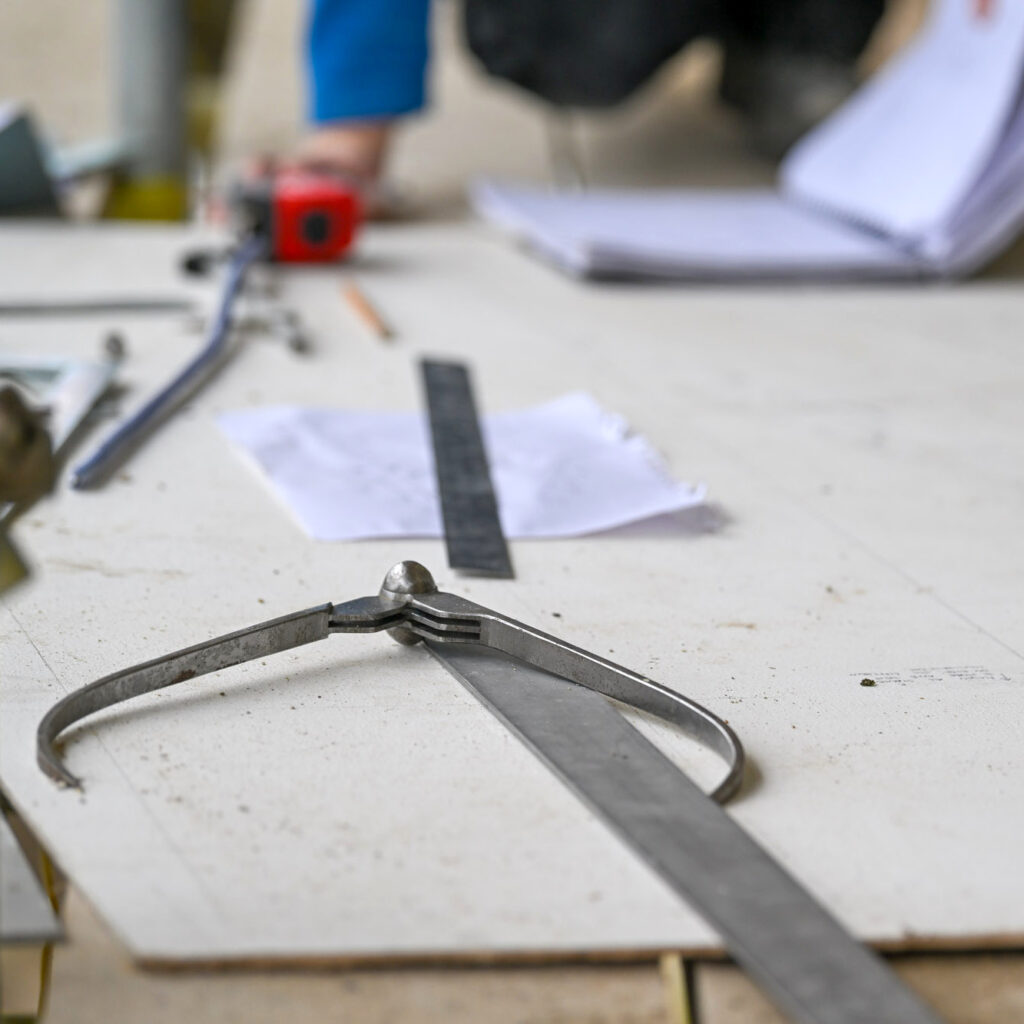
Learning begins with understanding the tools, materials and principles of the craft.
This progression is important. Making something correctly in the workshop is one part of learning; understanding how that knowledge is applied to an existing building is another. Historic buildings are rarely straight, regular or predictable. With experience, an apprentice develops the judgement to understand what is required, make informed decisions and take increasing responsibility for carrying a piece of work through properly.
The same principles inform our wider education and outreach work. Through Wolds Workshop, college programmes and collaborative projects, we create opportunities for people to look closely at historic buildings, understand how things were made and experience traditional materials and skills at first hand. Practical making is an important part of this, but it is also a way into a broader understanding of buildings: how materials behave, how buildings have changed, how they are cared for and the many different crafts and professions involved in that work.
Applying skill and judgement to the realities of an historic building.
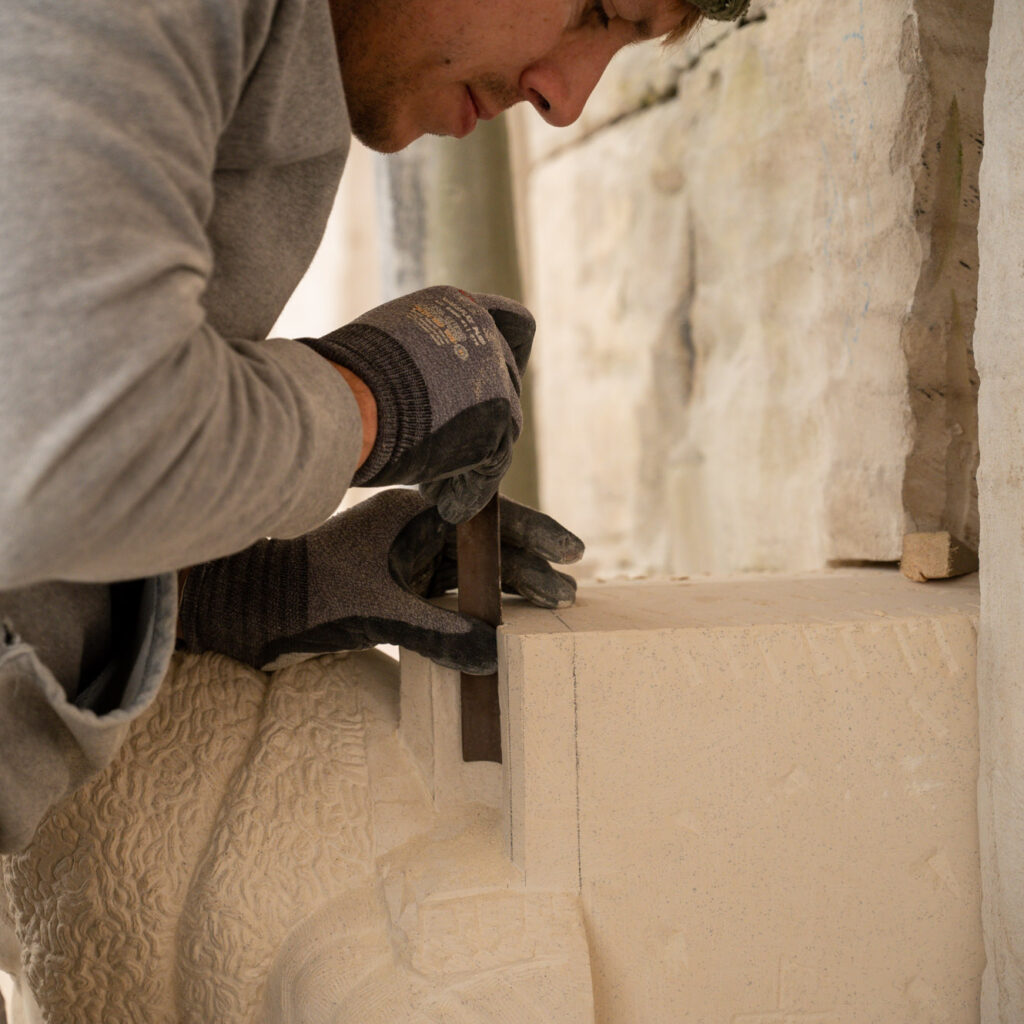
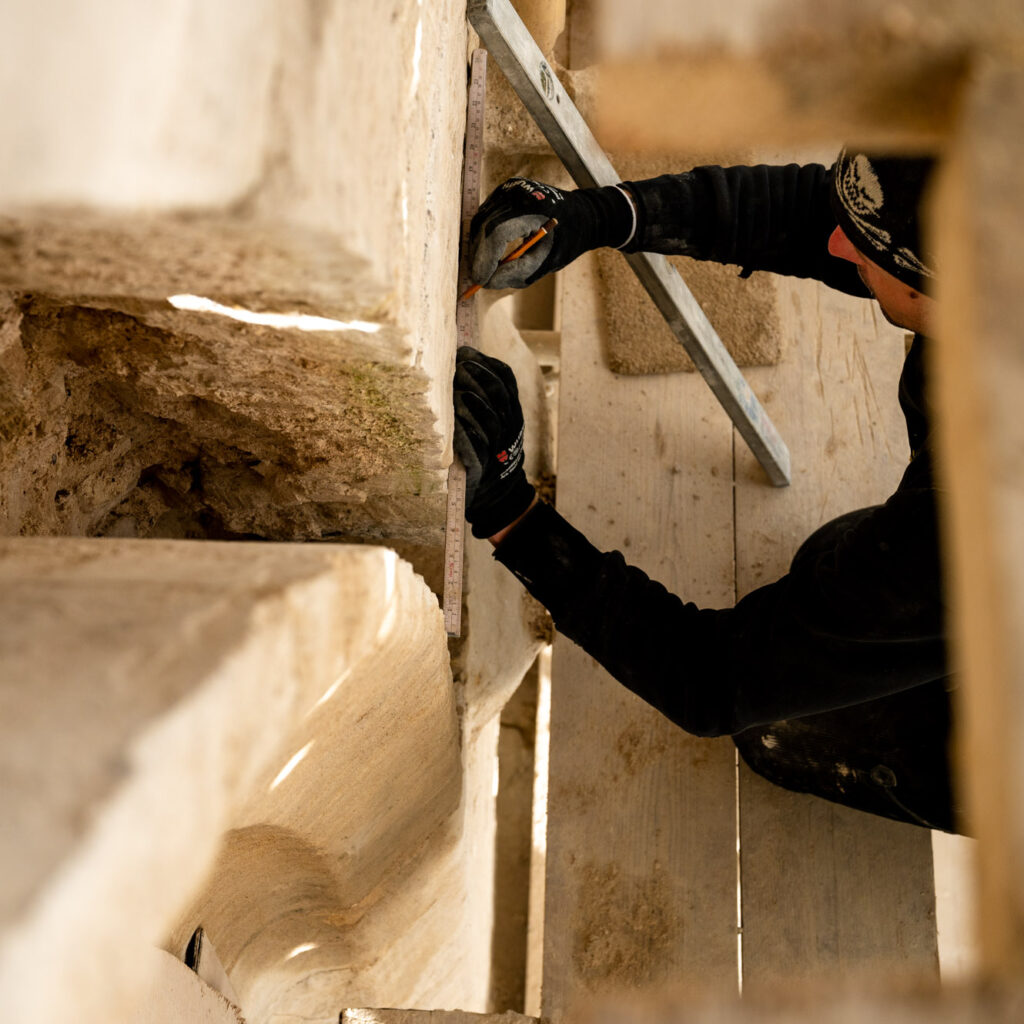
Precise measurement ensures that new and existing work together seamlessly.
Whether someone is beginning an apprenticeship or encountering heritage craft for the first time, we want them to understand not only how something is made, but the knowledge, judgement and responsibility that sit behind it — and, through making, to begin looking at historic buildings differently.
For more information about our outreach workshops, visit Wolds Workshop.